
The short answer
You need duct cleaning when there's a real problem, not just because time has passed. Common signs are debris blowing from registers, musty odors, pest activity, or dust left over from a remodel. PrimeBreeze inspects your ducts first and tells you whether cleaning, a targeted repair, or replacement is the right fix.
Your ducts carry all the air your furnace, air conditioner, or heat pump moves through your home. Over time they collect dust, construction debris, and pet hair. Sometimes they also collect things that shouldn't be there at all, like pest nesting material or growth caused by moisture. PrimeBreeze HVAC Repair Service cleans and inspects duct systems for homeowners in San Jose and nearby cities. We'll tell you plainly whether cleaning will help, whether a repair is the better fix, or whether your ductwork is too far gone for cleaning to make sense. Not every home needs duct cleaning, and we'd rather explain why than sell you a service you don't need.
Signs You May Need Duct Cleaning
Duct cleaning is worth considering when there's a specific problem. In the Santa Clara Valley, dry summers bring a lot of fine dust indoors. Mild, damp winters can cause moisture problems in ducts that run through crawlspaces or attics. Either one can show up as symptoms in your living space.
A dirty return grille or a clogged filter by itself doesn't mean the ducts need cleaning. Sometimes a filter change and a quick look are all that's needed.
- Visible dust or debris blowing out of supply registers when the system starts
- Dust settling on furniture again within a day or two of cleaning
- A musty or stale smell when the heat or air conditioning runs
- Signs of rodents or insects in the attic, in the crawlspace, or around duct openings
- Visible mold-like growth on duct surfaces, registers, or near the blower
- A recent remodel, drywall job, or flooring project that sent dust through the system
- A home you recently moved into where you don't know the duct history
What We Check
Before we recommend cleaning, we look at the whole air path. Dirty ducts are often a symptom of something else, like a leak pulling in attic dust or a filter that doesn't fit its slot.
If we find something that needs a closer look, such as suspected mold, we'll show you what we see with photos or a camera. Then we'll explain your options instead of guessing.
- Supply and return registers, grilles, and the first sections of duct behind them
- The return air pathway and filter slot, including gaps that let air bypass the filter
- The blower compartment, blower wheel, and evaporator coil area where we can reach them
- Duct runs in the attic or crawlspace, checking for crushed, kinked, torn, or disconnected sections
- Joints and seams, checking for gaps or failed tape
- Insulation on ducts that run through unconditioned spaces
- Signs of moisture, condensation, pests, or growth
Clean, Repair, or Replace
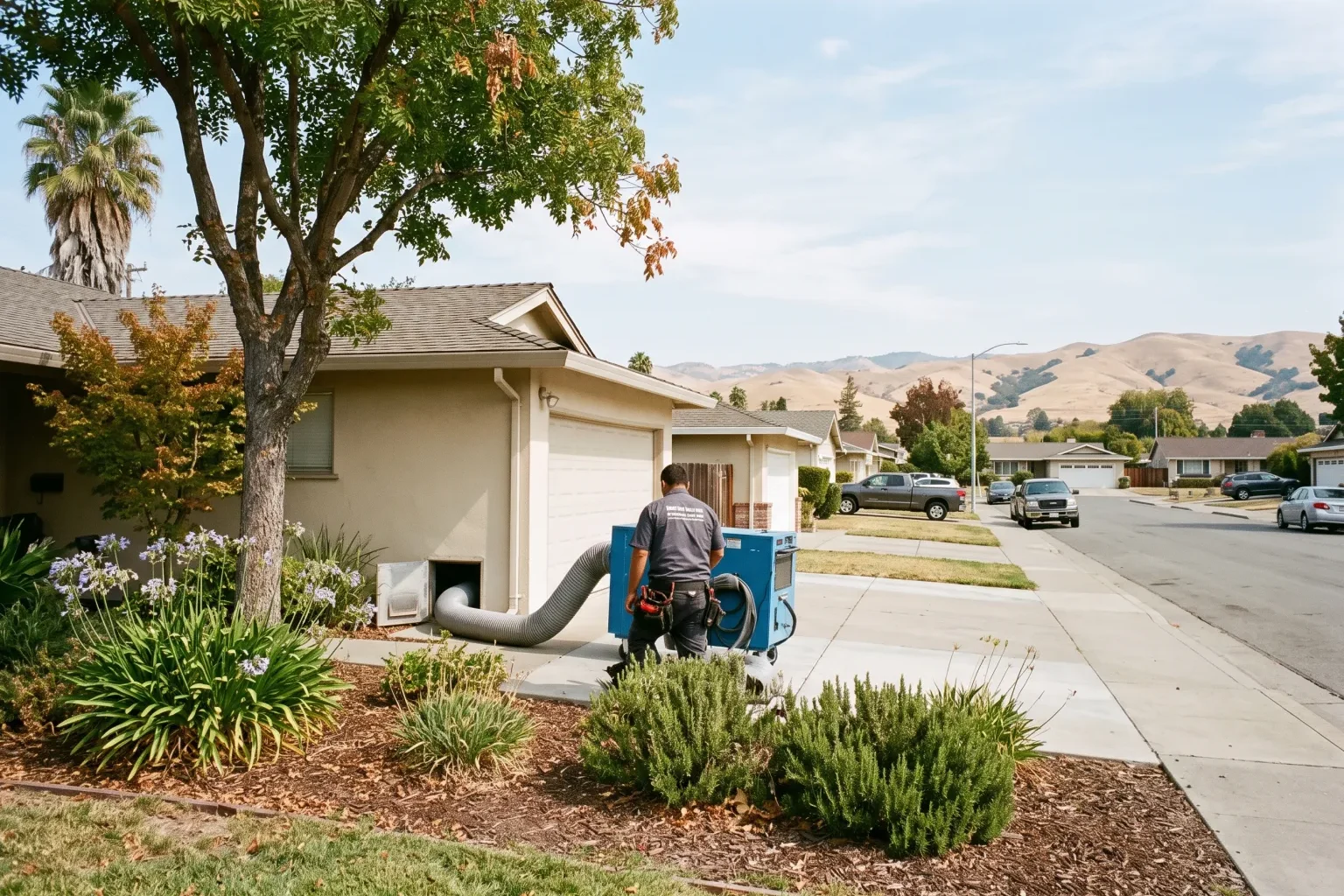
Cleaning makes sense when the ductwork is in sound condition and the problem is buildup. Our equipment puts the system under negative pressure and loosens debris so it gets pulled out instead of blown into your rooms. We also clean registers and grilles as part of the job.
Repair is often the better fix when ducts are mostly sound but have specific problems. For example, a disconnected run in the attic can dump conditioned air into a space you don't use and pull dusty air back into the system. Common repairs include reconnecting and resealing joints, replacing a crushed or torn flexible section, adding hangers so ducts don't sag, and re-insulating exposed runs.
Replacement is worth discussing in a few situations: flexible duct that is brittle, flattened, or contaminated throughout, insulation that has broken down along much of the system, or widespread pest damage. Cleaning old, deteriorating flex duct can tear it, so we won't recommend cleaning in that case. Replacement can also make sense if you're planning a new system. Under Bay Area Air District rules, gas furnaces manufactured from 2029 on must meet a zero-NOx standard, which points many homeowners toward heat pumps when a furnace is eventually replaced. Those rules don't require you to replace working equipment. Still, if a heat pump is in your future, it's worth checking whether your ducts are sized correctly and in good enough shape to support one.
What Affects the Cost
We don't quote duct cleaning as a flat number over the phone because the work varies a lot from house to house. These are the main factors:
After we've looked at the system, we give you a written estimate and explain each line. That way you can decide what to do now and what can wait.
- Number of supply and return registers
- Size of the home and total length of the duct runs
- Where the ducts are and how easy they are to reach, such as in a tight crawlspace or a low attic
- Type of duct: rigid metal, flexible duct, or duct board
- Amount and type of buildup, including construction debris or pest contamination
- Whether the blower, coil, or other equipment also needs cleaning
- Any repairs, sealing, or insulation work found during the inspection
How a Visit Works
First, we ask what you're noticing and when it started. Then we inspect the registers, return, equipment, and accessible duct runs, and we show you what we find.
If cleaning is the right call, we protect the floors and furniture near our work areas. We connect our equipment, seal off the registers, and work through the system section by section. We also clean the registers and grilles, check the filter fit, and replace the filter if you'd like.
Before we leave, we run the system, check airflow at the registers, and walk you through what we did. If we noticed issues we didn't fix, such as a section that will need repair later, we'll write them down so you aren't surprised down the road. You can stay home during the visit, though the equipment will be noisy while we work.