
The short answer
A ductless mini-split is a good fit when you need heating and cooling in rooms without ducts, or in spaces your current system can't keep comfortable. We assess your rooms, electrical service, and wall locations first, then recommend the right number and size of indoor units and walk you through the installation.
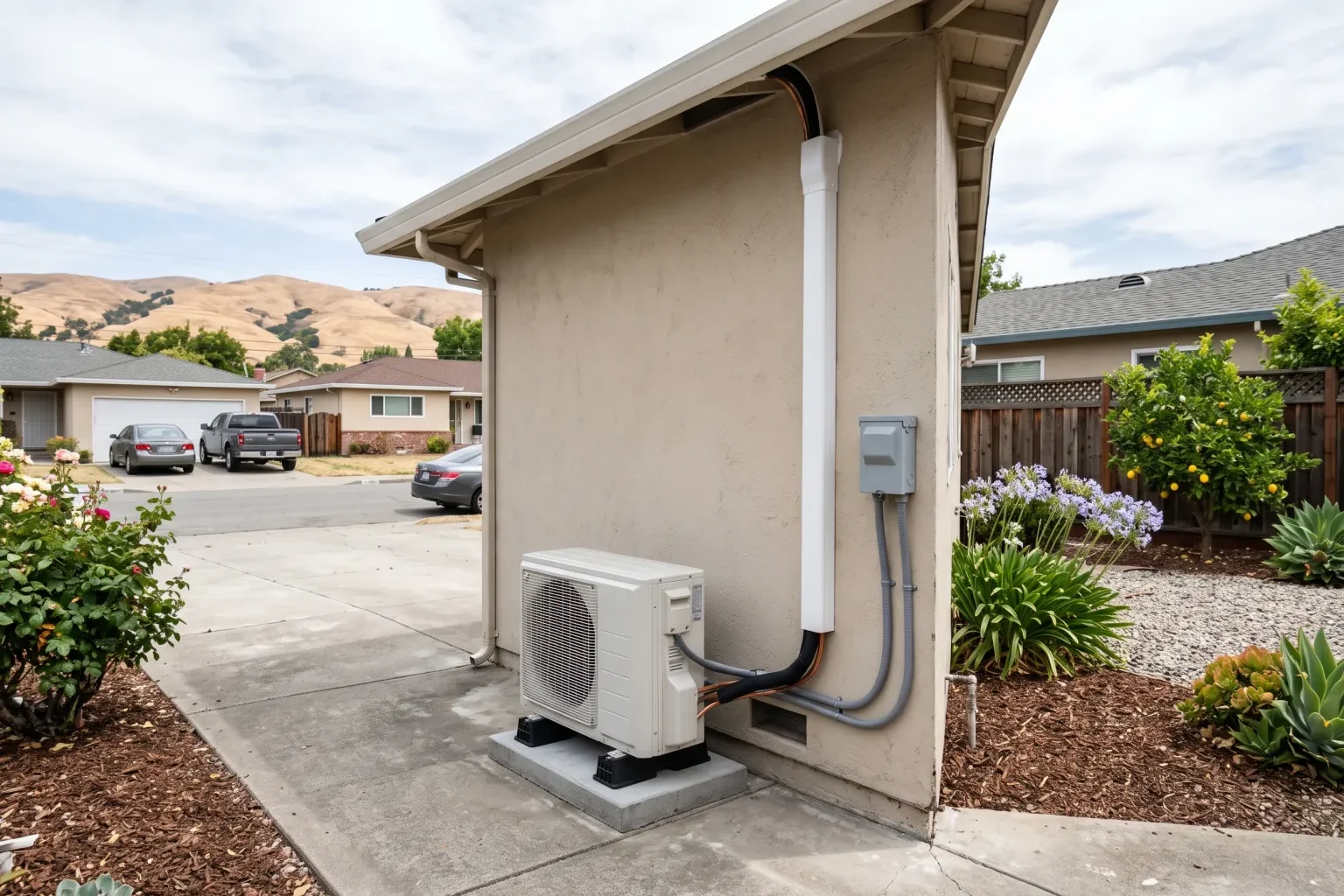
A ductless mini-split heats and cools individual rooms without ductwork. An outdoor unit connects to one or more indoor heads through a small opening in the wall. That opening carries the refrigerant lines, power, and a condensate drain. For many San Jose homes, it's a practical way to add efficient comfort where a central system falls short or doesn't exist. That includes older houses without ducts, converted garages, additions, and upstairs bedrooms that never stay comfortable. Mini-splits are heat pumps, so one system handles both cooling in summer and heating in winter. This page covers how to tell whether a mini-split fits your home, what we look at before recommending one, your options if you already have a system, what affects the cost, and what to expect when we come out.
Signs a Ductless Mini-Split Makes Sense
Mini-splits solve specific problems well. If one or more of these sounds familiar, it's worth a closer look.
The Santa Clara Valley has dry summers and mild, damp winters, and inland and southern parts of the valley run noticeably hotter in summer than areas near the Bay. That means a room that's only a little stuffy in one neighborhood can be uncomfortable for weeks in another. Rooms like that are often the ones a mini-split fixes.
- Your home has no ductwork, or the ducts are too small, damaged, or impractical to extend.
- You're finishing a garage, adding an accessory dwelling unit (ADU), or building an addition that the existing system can't serve.
- Upstairs rooms or a west-facing bedroom stay hot on summer afternoons while the rest of the house is fine.
- You rely on window units or space heaters and want something quieter and more efficient.
- Your furnace or wall heater is aging and you're considering moving to electric heating.
- Different people in the house want different temperatures in different rooms.
What We Check Before Recommending a System
A mini-split works well only when it's sized and placed correctly. An oversized unit cycles on and off and does a poor job removing moisture. An undersized one runs constantly on the hottest days. Before we suggest equipment, we look at the house itself.
We'll explain what we find in plain terms, including anything that could complicate the install, so there are no surprises later.
- Room sizes, ceiling heights, window area, sun exposure, and insulation, so each indoor unit can be sized for the space it serves.
- Your electrical panel's capacity and available breaker space, since a mini-split needs a dedicated circuit.
- Where the indoor heads can go for good airflow, and which wall locations allow a clean line route.
- Where the outdoor unit can sit with proper clearance, drainage, and a reasonable distance from bedrooms and neighbors.
- How condensate will drain, whether by gravity or with a small pump.
- Any existing heating or cooling equipment and how the new system will work alongside it.
Repair, Replace, or Add: Your Options
If you already have a mini-split that isn't working right, installation may not be the answer. Many problems can be repaired, including refrigerant leaks at line connections, clogged condensate drains, failed sensors, dirty coils, and remote or control board faults. We'll diagnose the issue first and tell you whether a repair is reasonable.
Replacement starts to make more sense when the system is older and needs a major component like a compressor, when repairs keep stacking up, or when it uses an older refrigerant that's harder to service. Sometimes the existing line set can be reused and sometimes it can't. We'll tell you which applies to your system.
If your central system works but a few rooms are always uncomfortable, adding a single-zone mini-split can be simpler than reworking ducts. If you're replacing an old furnace or wall heater, a multi-zone mini-split can take over heating and cooling for much or all of the house.
What Affects the Cost
Every installation is different, so we quote after seeing your home. These are the main factors that move the price up or down.
- Number of zones: one indoor unit for one room, or several heads connected to a larger outdoor unit.
- Equipment capacity and efficiency level, including models designed for better heating performance.
- Indoor unit style: wall-mounted, ceiling cassette, floor console, or concealed ducted heads.
- Line set length and routing, especially for runs through attics, crawlspaces, or multiple floors.
- Electrical work, such as a new circuit or a panel upgrade if capacity is limited.
- Outdoor mounting, whether on a pad, a wall bracket, or a stand.
- Condensate pumps, line covers, and wall patching or finishing.
- Permits and inspections required by your city.
How an Installation Visit Works
First comes the assessment. A technician walks through the rooms you want to condition, checks the electrical panel, and talks with you about how you use each space. You'll get a recommendation and a written quote that lists the equipment and the work involved.
On installation day, we protect floors and furniture, mount the indoor units, and drill the small wall openings for the line sets. We set the outdoor unit and run the refrigerant lines, wiring, and drain. Then we connect the electrical circuit. Before charging the system, we pressure-test the lines and pull a vacuum to remove moisture and air. These steps matter for long-term reliability.
Once the system is running, we check its operation in both cooling and heating modes. We show you how to use the remote or app and how to clean the filters. We also cover what routine maintenance looks like. A single-zone install often takes a day. Multi-zone systems or jobs with electrical upgrades can take longer, and we'll give you a realistic timeline up front.
Bay Area Rules and Incentives to Know
Under the Bay Area Air District's furnace rule, natural gas furnaces manufactured from 2029 must meet a zero-NOx emission standard. In practice, that points homeowners toward heat pumps when a furnace is replaced after that date. The Air District's appliance rules don't require you to replace working equipment, though. They apply only when an existing furnace or water heater fails or is replaced.
The federal Energy Efficient Home Improvement Credit (25C) covered qualifying heat pumps placed in service before December 31, 2025. It isn't available for new installations after that date. You can check BayREN and your local clean energy provider for current heat pump and electrification incentives. Amounts and availability change by funding cycle, so we confirm the current offer before including it in a quote.