The short answer
HVAC maintenance is a yearly checkup that cleans, tests, and inspects your heating and cooling system so small problems get fixed before they become breakdowns. In San Jose, schedule air conditioning service in spring and heating service in fall. Heat pumps benefit from a check before each season.
Most heating and cooling problems in San Jose homes don't start as emergencies. They start as a clogged filter, a weakening electrical part, or a drain line that slowly backs up. HVAC maintenance is a scheduled checkup that catches those problems while they're still small and easier to fix. PrimeBreeze HVAC Repair Service maintains furnaces, central air conditioners, and heat pumps for homeowners in San Jose and nearby cities. This page explains when maintenance makes sense, what a technician checks, how to think about repair versus replacement when a visit turns something up, and what to expect from start to finish.
Signs Your System Needs Maintenance
Many homeowners schedule maintenance once a year before the season they rely on most. Others wait until something feels off. Either way, these signs mean your system should be looked at soon:
If you smell gas, or you see a furnace flame that is yellow and flickering instead of mostly blue, turn the system off and contact your gas utility first. Those are safety issues, not routine maintenance.
- Rooms that heat or cool unevenly, or a house that takes longer to reach the thermostat setting
- Energy bills that rise without any change in how you use the system
- The system turning on and off in short, frequent cycles
- New noises such as rattling, squealing, grinding, or a loud click at startup
- A musty or burning smell while the system runs. A faint dusty smell the first time the heat comes on each fall is normal.
- Water pooling near the indoor unit or a dripping condensate line
- Ice forming on the refrigerant lines or the outdoor coil
- More dust in the house than usual, or a filter that clogs quickly
Timing Maintenance for the Santa Clara Valley Climate
The Santa Clara Valley has a Mediterranean climate with dry summers and mild, damp winters. Inland and southern parts of the valley run noticeably hotter in summer than areas near the Bay. For many homes, that means the air conditioner works hardest for a few months, while the heating system runs on and off through the cooler, wetter part of the year.
Spring is a good time to service an air conditioner, before the first hot stretch. Fall is a good time to service a furnace, before you need heat every night. A heat pump does both jobs, so it benefits from a check before each season. If you live in a hotter part of the valley, an early spring visit is especially worth scheduling.
What We Check During a Maintenance Visit
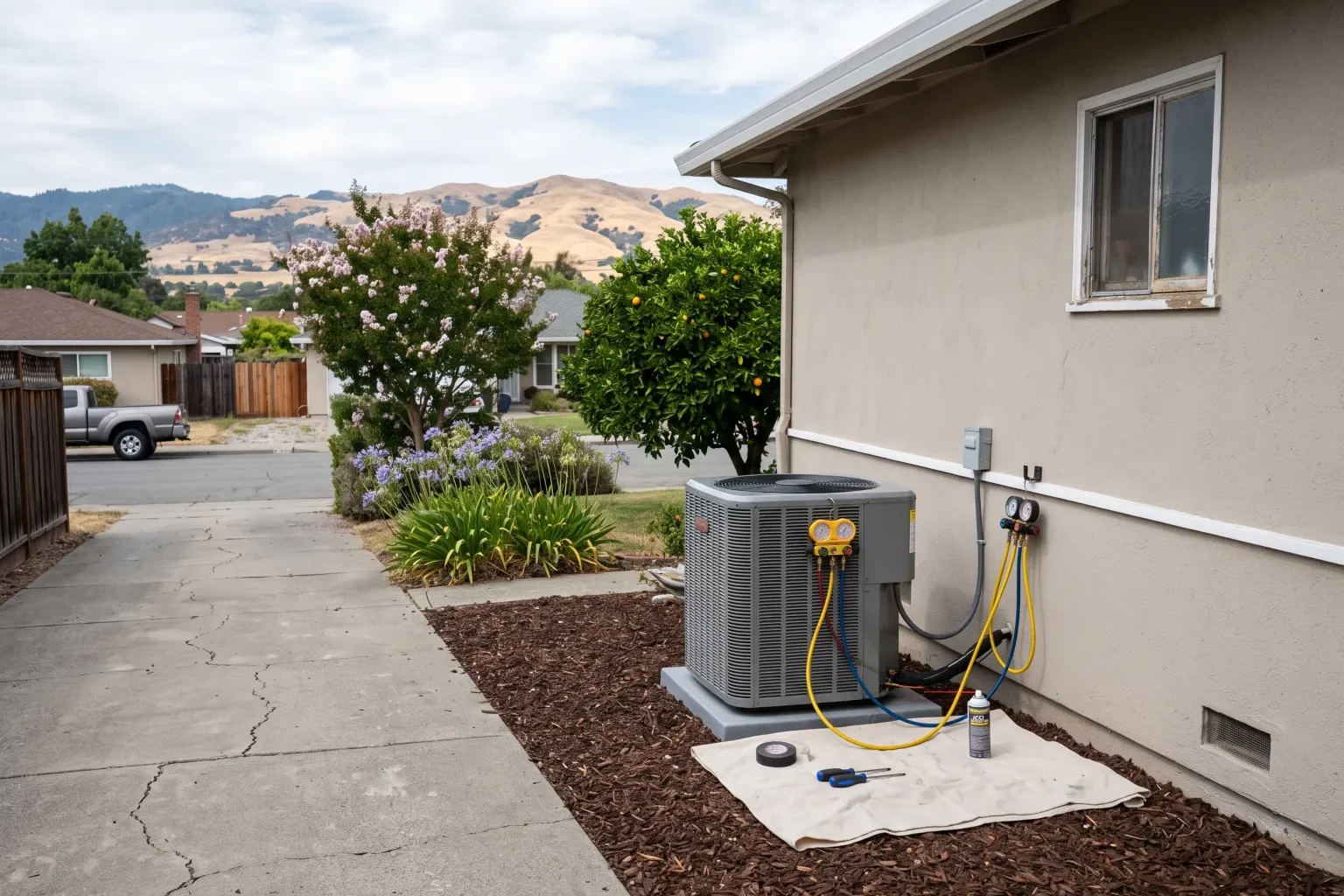
A maintenance visit covers more than a filter change. The exact checklist depends on your equipment, but a typical visit includes the following:
When we're done, we go over what we found in plain language. That includes anything worn, anything that needs attention now, and anything that can wait.
- Air filter condition and size, with replacement or a recommendation
- Thermostat operation, settings, and wiring
- Electrical connections, capacitors, and contactors, plus motor amperage draw
- Blower motor and blower wheel, cleaned if dirty
- Indoor and outdoor coils, and clearance around the outdoor unit from plants and debris
- Refrigerant system performance, including signs of leaks
- Condensate drain line and pan, cleared if needed
- Furnaces: burners, igniter, flame sensor, a visual check of the heat exchanger, venting, and safety switches
- Heat pumps: heating and cooling modes, the reversing valve, and the defrost cycle
- Visible ductwork for disconnected or leaking sections
Repair or Replace: What a Maintenance Visit Can Tell You
Maintenance often turns up a worn part, such as a failing capacitor, a dirty flame sensor, or a weak blower motor. In most cases a repair is the sensible choice. When a system is older, needs repairs more often, struggles to keep the house comfortable, or uses parts that are getting hard to find, it can make sense to start planning a replacement instead of waiting for a breakdown. We'll give you the facts on both options and let you decide.
Local rules matter here. The Bay Area Air District's appliance rules do not require you to replace working equipment. They apply only when an existing furnace fails or is replaced. Under those rules, natural gas furnaces manufactured from 2029 must meet a zero-NOx emission standard. In practice, that points homeowners toward heat pumps when they replace a furnace after that date. If your furnace is aging, it's worth knowing this before you face a replacement decision.
On incentives: the federal Energy Efficient Home Improvement Credit covered qualifying heat pumps placed in service before December 31, 2025. It is not available for new installations after that date. Bay Area homeowners can check BayREN and their local clean energy provider for current heat pump and electrification incentives. Amounts and availability change by funding cycle, so we confirm the current offer before we mention it in a quote.
What Affects the Cost of Maintenance
The cost of a maintenance visit depends on your home and your equipment. We explain what's involved before we start any work beyond the standard checkup. The main factors are:
- The type and number of systems, such as a furnace and AC pair, a heat pump, or more than one zone
- How long it has been since the last service, and how much cleaning the coils, blower, and drain need
- Access to the equipment, such as an attic, crawlspace, or tight closet
- Repairs or replacement parts found during the inspection
- Any refrigerant work the system needs
- Whether the visit is planned ahead or needed on short notice
How a Maintenance Visit Works
First, you schedule a time that works for you. We'll ask what equipment you have and whether you've noticed any problems, so the technician arrives prepared.
When the technician arrives, they'll ask about any noises, smells, or comfort issues you've noticed. Then they'll inspect, clean, and test the system using the checklist above. Your system may be off for part of the visit while the technician works on it.
Afterward, the technician walks you through the findings. If something needs repair, you'll hear what it is, why it matters, and what your options are before any additional work begins. Nothing beyond the maintenance you scheduled happens without your approval.