
The short answer
Indoor air quality service looks at your filters, ductwork, ventilation, humidity, and HVAC equipment to find what is causing dust, odors, stuffiness, or uneven comfort. Many problems are solved with a better filter, duct sealing, or cleaning, while others call for added equipment such as a media filter, humidity control, or fresh-air ventilation.
The air inside your home passes through your heating and cooling system many times a day. When filters clog, ducts leak, or humidity drifts too high or too low, you can feel it: more dust, stuffy rooms, lingering odors, or a house that never quite feels fresh. PrimeBreeze HVAC Repair Service helps homeowners in San Jose and nearby cities figure out what is actually affecting their indoor air and fix it at the source. We look at your system as a whole, explain what we find in plain terms, and recommend only what makes sense for your home.
Signs Your Home Needs an Indoor Air Quality Check
Air quality problems usually build slowly, so they are easy to get used to. The Santa Clara Valley's dry summers and mild, damp winters also mean conditions inside your home can shift with the seasons. Dry summer air can carry more dust, while closed-up winter months can trap moisture and odors.
If any of the signs below sound familiar, an inspection can help pinpoint the cause.
- Dust settles on furniture soon after you clean
- Allergy or sinus symptoms that feel worse indoors
- Musty, stale, or burning smells when the system runs
- Rooms that feel stuffy or close, even at a comfortable temperature
- Condensation on windows or signs of mold in winter
- Dry skin, static shocks, or irritated eyes during dry months
- Visible dirt or debris around supply and return vents
- Filters that look clogged well before their scheduled change
What We Check During an Indoor Air Quality Visit
We start by listening. You know when the air feels worst, which rooms bother you, and what changed recently, such as a remodel, a new pet, or a new piece of equipment. That context tells us where to look first.
From there, we inspect the parts of your system that most often affect indoor air:
- Air filter type, fit, and condition, including gaps that let air bypass the filter
- Return and supply ductwork for leaks, disconnected sections, and dust buildup
- Blower and evaporator coil for dirt, debris, and biological growth
- Condensate drain line and pan for clogs or standing water
- Indoor humidity levels and how your system handles moisture
- Ventilation, including bath and kitchen exhaust and fresh-air supply
- Airflow balance between rooms
- Combustion equipment, if you have a gas furnace, for safe venting
Repair, Upgrade, or Replace: Your Options
Not every air quality complaint needs new equipment. In many homes, the right fix is simple: a properly sized filter that fits snugly, sealing leaky return ducts that pull in attic or crawlspace air, cleaning a dirty coil or blower, or clearing a clogged condensate drain. These repairs often make a noticeable difference on their own.
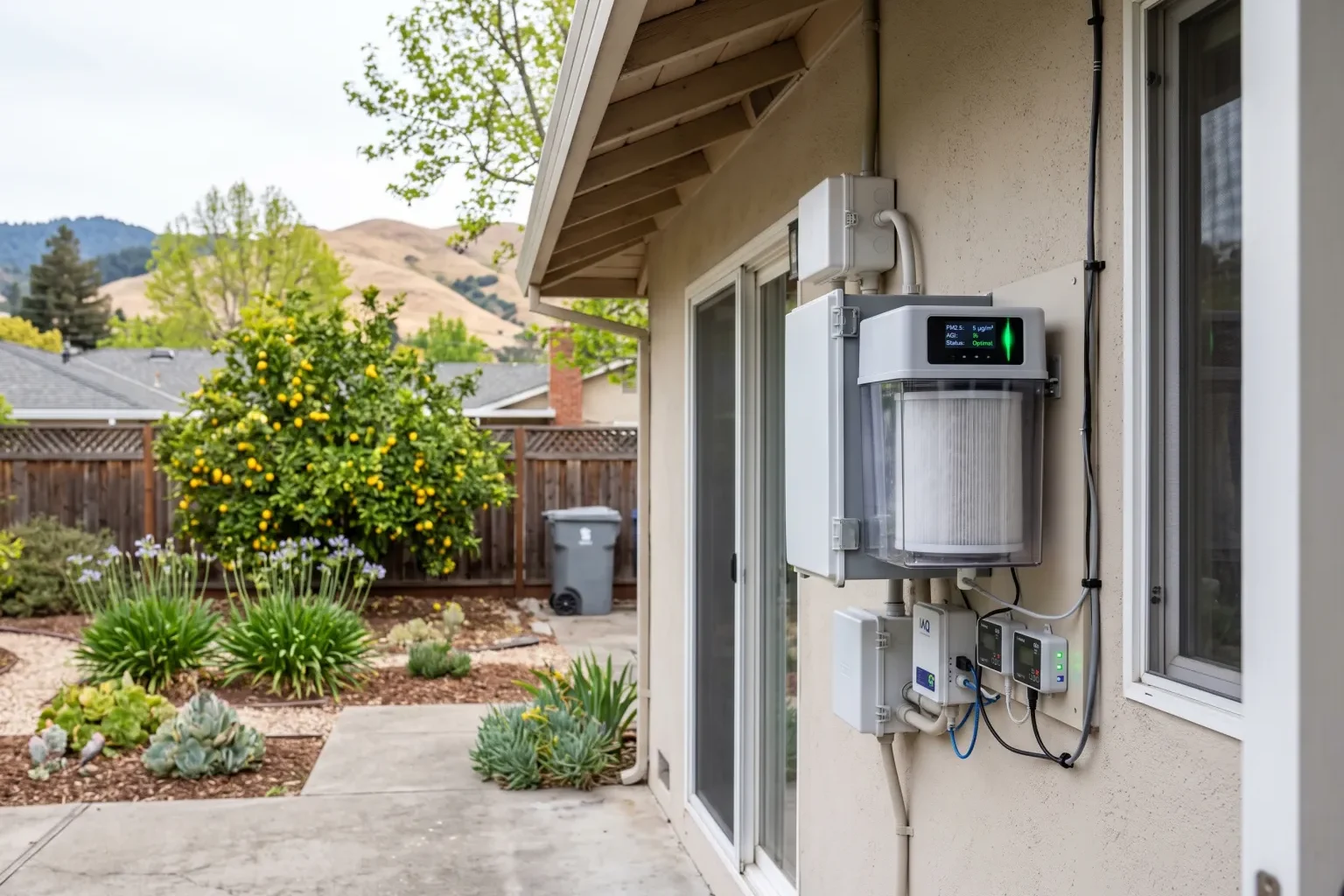
When repairs are not enough, upgrades can help. Options include a media filter cabinet that holds a deeper, higher-efficiency filter, a whole-home humidifier or dehumidifier, or a ventilation system that brings in filtered outdoor air while exhausting stale indoor air. We explain what each option does, what it will not do, and whether it fits your home and system.
Sometimes the equipment itself is the problem. An older system with a worn blower, a cracked heat exchanger, or ductwork in poor condition may be better replaced than repaired. If you are weighing a furnace replacement, keep in mind that Bay Area Air District rules call for new gas furnaces manufactured from 2029 to meet a zero-NOx standard, which in practice points many homeowners toward heat pumps. Those rules do not require you to replace working equipment, so we will not push a replacement you do not need.
What Affects the Cost of Indoor Air Quality Work
Every home is different, so we give you a clear quote after the inspection rather than guessing beforehand. Several factors shape the scope of the work:
- Whether the fix is a repair, a cleaning, or new equipment
- The size of your home and the length and layout of your ductwork
- How easy it is to reach ducts in the attic, crawlspace, or walls
- The type of filtration, humidity control, or ventilation you choose
- Whether your existing system can support an add-on or needs changes
- The condition of your current HVAC equipment
- Any electrical, drainage, or venting work an upgrade requires
How an Indoor Air Quality Visit Works
When you contact us, we ask a few questions about what you are noticing and schedule a time that works for you. Our technician arrives, talks through your concerns, and inspects your system and the rooms that bother you most.
After the inspection, we walk you through what we found, show you any problems we can, and lay out your options from simplest to most involved. You decide what to do. If the fix is straightforward, such as a filter change or drain cleaning, we can often handle it during the same visit. Larger projects are scheduled at your convenience.
Before we leave, we explain how to keep your air in better shape, including how often to change your filter and what to watch for between visits.